

-
1 исключительно негативный
-
2 исключительноый негативный
Русско-английский большой базовый словарь > исключительноый негативный
-
3 Ц-15
ПЫШНЫМ ЦВЕТОМ расцвести, распуститься и т. п. NP instrum Invar adv usu. used with pfv verbs fixed WO(to develop) extensively, in full measure (in contemp. usage, usu. used ironically of negative qualities and phenomena)blossomflourish thrive reach full flower (of negative phenomena only) run rampant.Талант его расцвел пышным цветом лишь в последний период его жизни. It was only in the last period of his life that his talent blossomed.В труппе театра пышным цветом расцвели зависть и взаимная злоба. Jealousy and mutual loathing ran rampant in the theater company. -
4 пышным цветом
• ПЫШНЫМ ЦВЕТОМ расцвести, распуститься и т. п.[NPinstrum; Invar; adv; usu. used with pfv verbs; fixed WO]=====⇒ (to develop) extensively, in full measure (in contemp. usage, usu. used ironically of negative qualities and phenomena):- blossom;- flourish;- thrive;- [of negative phenomena only] run rampant.♦ Талант его расцвел пышным цветом лишь в последний период его жизни. It was only in the last period of his life that his talent blossomed.♦ В труппе театра пышным цветом расцвели зависть и взаимная злоба. Jealousy and mutual loathing ran rampant in the theater company.Большой русско-английский фразеологический словарь > пышным цветом
-
5 Ч-90
ЧЁРТ ЗНАЕТ кто, что, как, какой, где, куда, откуда, почему, сколько highly coll VP subj. Invar fixed WO1. no one knows or it is impossible to know (who, what, how etc): the devil (only) knows (who (what, how etc))goodness (God, heaven) (only) knows (who etc) (I'll be) damned if I know (who etc)(Почтмейстер:) В том-то и штука, что он и не уполномоченный и не особа! (Городничий:) Что ж он, по-вашему, такое? (Почтмейстер:)...Чёрт знает что такое (Гоголь 4). (Р.:) Well, you see, that's just the point: he's not a personage and not in a position of authority. (Mayor:) What is he then in your opinion? (P:)...Goodness only knows what he really is (4c).«Эта девушка мне нравится. Черт знает почему, но нравится» (Евтушенко 1). "I like this girl. God knows why, but I do..." (1a).Да, вот так быть за председателя колхоза, когда ты в то же время и главный подвозчик дров, и сена, и черт знает ещё чего. Каждый, кому не лень, глотку на тебя дерет (Абрамов 1). Yes, that's what it was like to be acting kolkhoz Chairman when you were also the chief source of firewood and hay and heaven knows what else. Anyone who felt like it would give you a bawling out (1a).2.Interj) used to express anger, indignation, a negative attitude toward sth., or admiration, reaction to an unexpected development etcthe devil (only) knows (who (what etc))!dammit! good Lord!(Кочкарев:) Будто у них (женщин) только что ручки!.. У них, брат... У них, брат, просто чёрт знает чего нет (Гоголь 1). (К.:) As though they (women) only had nice little hands....They've got....The Devil only knows what they haven't got (1 a).(Кочкарев:) Ты рассмотри только глаза её: ведь это чёрт знает, что за глаза: говорят, дышат (Гоголь 1). (К.:) Look at her eyes. Dammit, what eyes! They speak, they breathe (1b). -
6 черт знает
[VPsubj; Invar; fixed WO]=====1. no one knows or it is impossible to know (who, what, how etc):- the devil (only) knows (who <what, how etc>);- goodness (God, heaven) (only) knows (who etc);- (I'll be) damned if I know (who etc).♦ [Почтмейстер:] В том-то и штука, что он и не уполномоченный и не особа! [Городничий:] Что ж он, по-вашему, такое? [Почтмейстер:]...Чёрт знает что такое (Гоголь 4). [Р:] Well, you see, that's just the point: he's not a personage and not in a position of authority. [Mayor:] What is he then in your opinion? [P:]... Goodness only knows what he really is (4c).♦ "Эта девушка мне нравится. Черт знает почему, но нравится" (Евтушенко 1). "I like this girl. God knows why, but I do..." (1a).♦ Да, вот так быть за председателя колхоза, когда ты в то же время и главный подвозчик дров, и сена, и чёрт знает ещё чего. Каждый, кому не лень, глотку на тебя дерёт (Абрамов 1). Yes, that's what it was like to be acting kolkhoz Chairman when you were also the chief source of firewood and hay and heaven knows what else. Anyone who felt like it would give you a bawling out (1a).2. [Interj]⇒ used to express anger, indignation, a negative attitude toward sth., or admiration, reaction to an unexpected development etc:- the devil (only) knows (who <what etc>!;- dammit!;- good Lord!♦ [Кочкарёв:] Будто у них [ женщин] только что ручки!.. У них, брат... У них, брат, просто чёрт знает чего нет (Гоголь 1). [К.:] As though they [women] only had nice little hands....They've got....The Devil only knows what they haven't got (1a).♦ [Кочкарёв:] Ты рассмотри только глаза её: ведь это чёрт знает, что за глаза: говорят, дышат (Гоголь 1). [К.:] Look at her eyes. Dammit, what eyes! They speak, they breathe (1b).Большой русско-английский фразеологический словарь > черт знает
-
7 небаланс напряжений
небаланс напряжений
Отличие по модулю значения хотя бы одного из фазных или линейных напряжений многофазной системы электроснабжения от значений напряжений других фаз.
[ ГОСТ 23875-88]EN
voltage unbalance
phenomenon due to the differences between voltage deviations on the various phases, at a point of a polyphase system, resulting from differences between the phase currents or geometrical asymmetry in the line
[IEV number 604-01-29]
voltage unbalance (imbalance)
in a polyphase system, a condition in which the magnitudes of the phase voltages or the phase angles between consecutive phases are not all equal (fundamental component)
NOTE In three phase systems, the degree of inequality is usually expressed as the ratio of the negative and zero sequence components to the positive sequence component. In this technical report, voltage unbalance is considered in relation to three-phase systems and negative sequence only
[IEC 61000-3-13, ed. 1.0 (2008-02)]
voltage unbalance
condition in a polyphase system in which the r.m.s. values of the line voltages (fundamental component), and/or the phase angles between consecutive line voltages, are not all equal
NOTE 1 The degree of the inequality is usually expressed as the ratios of the negative- and zero-sequence components to the positive-sequence component.
NOTE 2 In this standard, voltage unbalance is considered in relation to 3-phase systems.
[IEC 61000-4-30, ed. 2.0 (2008-10)]FR
déséquilibre des tensions d'un réseau
phénomène résultant des différences de charge ou des dissymétries géométriques de lignes et qui provoque des différences entre les écarts de tension sur les diverses phases en un point d'un réseau polyphasé
[IEV number 604-01-29]
déséquilibre de tension
dans un réseau d’énergie électrique polyphasé, état dans lequel les valeurs efficaces des tensions entre conducteurs (composante fondamentale), et/ou les différences de phase entre conducteurs successifs, ne sont pas toutes égales
NOTE 1 Le taux de déséquilibre s’exprime habituellement par le rapport de la composante inverse ou homopolaire à la composante directe.
NOTE 2 Dans la présente norme, le déséquilibre de tension est relatif aux réseaux triphasés
[IEC 61000-4-30, ed. 2.0 (2008-10)]Параллельные тексты EN-RU
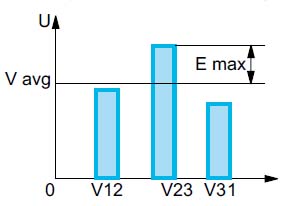
Voltage unbalance
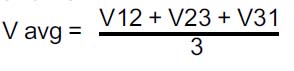
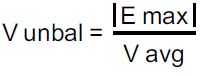
Voltage unbalance on the most unbalanced phase, displayed as a percentage of Vavg.
[Schneider Electric]Небаланс напряжений
Самое значительное отличие по модулю значения одного из линейных напряжений, выраженное в процентах от среднего напряжения Vavg.
[Перевод Интент]
Недопустимые, нерекомендуемые
Тематики
EN
DE
FR
Смотри также
Русско-английский словарь нормативно-технической терминологии > небаланс напряжений
8 П-7
ПАЛКА О ДВУХ КОНЦАХ NP sing only subj-compl with бытье, оказаться ( subj: abstr, often это) fixed WO(an action, policy, process etc that) has both positive and negative aspects and therefore is equally likely to bring about positive consequences as negative consequencesX - палка о двух концах - X is a double-edged (two-edged) swordX could go either wayX can cut both ways. "(B статье) нового много выводят, да, кажется, идея-то о двух концах» (Достоевский 1). There is much that is new in it (the article), but it seems the argument is two-edged" (1a).9 Ц-32
ЗНАТЬ (less often УЗНАВАТЬ/УЗНАТЬ) ЦЕНУ кому-чему VP subj: usu. human) to assess correctly the value of s.o. or sth. ( occas. refers to a negative evaluation)X знает цену Y-y - X knows Y's worth (the worth of Y)X knows what Y is (really) worth X knows the (true) value of Y (in refer, to a negative evaluation only) X knows Y for what Y is.Чем вызван был такой успех? Ведь цену своим рассказам я знаю. Не такие уж они замечательные (Довлатов 1). What was the reason for my success? After all, I knew the true value of my stories. They weren't all that remarkable (1a).И хотя мать не верила Иосифу, знала ему цену, но доверилась дедушке: другого выхода не было (Рыбаков 1). Mother didn't trust Yosif, she knew him for what he was, but she did trust grandfather, and there was no other way out (1a).10 палка о двух концах
[NP; sing only; subj-compl with быть, оказаться (subj: abstr, often это); fixed WO]=====⇒ (an action, policy, process etc that) has both positive and negative aspects and therefore is equally likely to bring about positive consequences as negative consequences:- X can cut both ways.♦ "[В статье] нового много выводят, да, кажется, идея-то о двух концах" (Достоевский 1). "There is much that is new in it [the article], but it seems the argument is two-edged" (1a).Большой русско-английский фразеологический словарь > палка о двух концах
11 знать цену
[VP; subj: usu. human]=====⇒ to assess correctly the value of s.o. or sth. (occas. refers to a negative evaluation):- [in refer, to a negative evaluation only] X knows Y for what Y is.♦ Чем вызван был такой успех? Ведь цену своим рассказам я знаю. Не такие уж они замечательные (Довлатов 1). What was the reason for my success? After all, I knew the true value of my stories. They weren't all that remarkable (1a).♦ И хотя мать не верила Иосифу, знала ему цену, но доверилась дедушке: другого выхода не было (Рыбаков 1). Mother didn't trust Yosif, she knew him for what he was, but she did trust grandfather, and there was no other way out (1a).Большой русско-английский фразеологический словарь > знать цену
12 узнавать цену
[VP; subj: usu. human]=====⇒ to assess correctly the value of s.o. or sth. (occas. refers to a negative evaluation):- [in refer, to a negative evaluation only] X knows Y for what Y is.♦ Чем вызван был такой успех? Ведь цену своим рассказам я знаю. Не такие уж они замечательные (Довлатов 1). What was the reason for my success? After all, I knew the true value of my stories. They weren't all that remarkable (1a).♦ И хотя мать не верила Иосифу, знала ему цену, но доверилась дедушке: другого выхода не было (Рыбаков 1). Mother didn't trust Yosif, she knew him for what he was, but she did trust grandfather, and there was no other way out (1a).Большой русско-английский фразеологический словарь > узнавать цену
13 узнать цену
[VP; subj: usu. human]=====⇒ to assess correctly the value of s.o. or sth. (occas. refers to a negative evaluation):- [in refer, to a negative evaluation only] X knows Y for what Y is.♦ Чем вызван был такой успех? Ведь цену своим рассказам я знаю. Не такие уж они замечательные (Довлатов 1). What was the reason for my success? After all, I knew the true value of my stories. They weren't all that remarkable (1a).♦ И хотя мать не верила Иосифу, знала ему цену, но доверилась дедушке: другого выхода не было (Рыбаков 1). Mother didn't trust Yosif, she knew him for what he was, but she did trust grandfather, and there was no other way out (1a).Большой русско-английский фразеологический словарь > узнать цену
14 татуировка тюремная
• "Баклан" (жаргонное слово, означающее "хулиган").—"Biff-guy" (the jargon for hoodlum, rowdy, street-tough). • "Верю в воровскую романтику".—"I believe in the romance of the underworld".
 • "Верю в свою фортуну". —"I believe in my fortune".
 • "Воровской крест", символ авторитета в среде заключенных.—The "thieves' cross", a symbol of authority with prison inmates. The inscription means "amen".
 • "Вот что нас губит".—"This is what we are ruined by".
 • "Завязал".—"Gone straight" (the jargon for "renounced a life of crime).
 • "Искушен с юных лет". —"Corrupted from my youth up".
 • "Мой бог — злой демон". —"My God is a malignant demon".
 • "Проигрался — плати!"—"If you lose at cards, pay your debt!"
 • "Смерть прокурору!" —"Death to prosecutor!"
 • "Смерть той, которая толкнула меня на преступление и предала". Число поленьев означает полученный срок.—"Death to the one who drove me to crime and than betrayed". The number of logs stands for a prison term in years.
 • 18 лет исполнилось в ВТК.—Came of age in a penitentiary for youths.
 • Вера в удачу. —Faith in good luck.
 • Все в жизни преходяще. —Everything in life is transient.
 • Всю жизнь за решеткой—All life long behind bars.
 • Долгое время занимался кражами и грабежами, неоднократно судим; "авторитет".—Engaged for a long time in larcenies and robberies, had several convictions; a "big" (the jargon for one who is a big shot in crime)
 • Жизнь тает как свеча. Туз треф — тюрьма, туз пик — надежда. Надпись на латыни — "жизнь коротка".—The life is melting away like a candle. The ace of clubs stands for prison, the ace of spades — for hope. The inscription in Latin means "the life is short".
 • Жить — значит бороться.—The inscription in Latin means "to live is to fight".
 • Знак дружбы до заключения.—A sign of friendship before imprisonment.
 • Карикатура на сотрудников правоохранительных органов. Иногда волк изображается в форме.—A cartoon of law-enforcement officers. The wolf sometimes appears uniformed.
 • Клятва мести.—A vow of vengeance.
 • Кровная месть. —Vendetta.
 • Купола означают число "ходок" (судимостей).—The domes stand for the number of "trips" (the jargon for convictions).
 • На преступление толкнула женщина.—Driven to crime by a woman. "УК" is the acronym for Penal Code.
 • Наполеон — авторитет в уголовном мире?—Napoleon — a man of authority with the underworld?
 • Начал воровать и грабить. —Began to steal and rob.
 • Обе татуировки имеют одинаковое значение: "было счастье, да черт унес". Подкова — символ удачи, заплата на мешке — тюремная решетка.—Both tattoos have the same meaning: "I had good fortune, but it was carried away by the devil". The horseshoe is a symbol of good luck, the patch on the bag stands for prison bars.
 • Осужден за убийство жены или родственника.—Convicted for the murder of the wife or a relative.
 • Отбывал срок на Севере.—Served time in the northern regions (the inscription means "North").
 • Оторван от жизни. —Cut off from life.
 • Символ борьбы за лидерство среди уголовников. Наносится на лопатках.—A symbol of fighting for leadership in the underworld. Drawn on the shoulder-blades.
 • Символ отрицательного отношения к работникам правоохранительных органов.—A symbol of negative attitude to law-enforcement officers.
 • Символ товарищества в местах лишения свободы—A symbol of comradeship in places of confinement. The inscription means "freedom".
 • Склонен к жестокости и насилию. Лица с такой татуировкой в ИТУ называются "бойцами".—Given to brutality and violence. The persons so tattooed are called "strong-arm men" in places of confinement.
 • Склонен к побегу из мест заключения.—Given to escape from places of confinement.
 • Склонен к разбоям и грабежам.—Given to hold-ups and robberies.
 • Судим за грабеж. —Convicted for robbery.
 • Татуировка пассивного гомосексуалиста. Наносится насильно (только на спине).—A tattoo of a passive homosexual. Made by force (only on the back).
 • Татуировки, характерные для наркоманов.—Distinctive tattoos of drug-addicts.
 • Тоска по дому, по воле. —Longing for home, for freedom.
 • Злая неволя отняла солнце, любовь, надежду.—The sun, love and hope were taken away by the evil captivity.
 • "Вафлер" (минетчик). Татуировка наносится насильно.—"Bone queen" (the jargon for a male homosexual fellator). The tattoo is made by force.
 • "По стопам любимого отца" (память о судимых родителях).—"Following in my dear father's footsteps" (in memory of convicted parents).
 • "Села на якорь" (осуждена к лишению свободы).—"Got the key" (the jargon for "sentenced to a term in prison").
 • "Сердцеедка". —A "man-killer".
 • "Тянул срок" (был в заключении).—"Laid in lavenders (the jargon for "served a term of imprisonment").
 • "Чухан" (грязный, опустившийся заключенный, презираемый сокамерниками).—"Crum" (the jargon for a dirty, degraded prisoner held in contempt by cellmates).
 • "Шестерка" (осужденный, прислуживающий сокамерникам).—"Gummy" (the jargon for a prisoner used by cellmates to run errands).
 • Ангелы — символ надежды.—The angels are a symbol of hope.
 • Была невинной, была свободной.—I was innocent, I was free.
 • В объятиях злой судьбы. —In the embrace of ill fate.
 • Верю в свою любовь. —I believe in my love.
 • За причиненное мне зло — отомщу!—I'll revenge the evil done to me!
 • Муза всегда в моей душе. —The Muse is always in my heart.
 • Наркоман. —A drug-addict.
 • Невинно осужденная. —Convicted without guilt.
 • Ожидание свободы, счастливой жизни.—In expectation of freedom and happy life.
 • Отбывала срок на чужбине (за пределами России).—Served time in a strange land (beyond the boundaries of Russia).
 • Отрицательно настроен к работникам правоохранительных органов.—A symbol of negative attitude to law-enforcement officers.
 • Отсидела срок "звонком" (отбыла наказание полностью).—"Maxed-out" (the jargon for "completed a maximum sentence without previously earning parole").
 • Память об умерших родителях.—In memory of the deceased parents.
 • Память об умерших родителях.—In memory of the deceased parents.
 • Пережила зло, предательство, любовь.—Gone through evil, betrayal, love.
 • Перстень несовершеннолетних преступников. "Свети вору, а не прокурору".—A finger-ring of juvenile delinquents. "Shine for thief, but not for prosecutor".
 • Погубила свекровь.—My life was ruined by Mother-in-law.
 • Рождена свободной. —Born free.
 • Семнадцать лет исполнилось в ВТК.—Turned seventeen at a penitentiary for youths.
 • Символ амнистии, снижения срока.—A symbol of amnesty or reduction in a prison term.
 • Символ любви. —A symbol of love.
 • Символ материнской любви и веры в будущее.—A symbol of motherly love and faith in the future.
 • Судим за грабеж. —Convicted for robbery.[m1 ]• Судим за изнасилование. —Convicted for rape.
 • Судим за кражу государственного или общественного имущества.—Convicted for theft of state or public property.
 • Судим за кражу, склонен к созданию группировок.—Convicted for larceny. Given to formation of gangs.
 • Судим за разбой. —Convicted for armed robbery.
 • Судим за убийство, нанесение тяжких телесных повреждений.—Convicted for murder or grievous bodily harm.
 • Судим за хулиганство. He поддается перевоспитанию.—Convicted for hooliganism. Unamenable to reforming.
 • Счастье было почти в руках. —Fortune was next my hand.
 • Татуировка наркоманок.—A tattoo of female drug-addicts.
 • Умею хранить тайну. —Able to keep a secret.
 • Я бандитка.—I am a gun-woman.
 -----------------тж. см. татуировки-акронимы
English-Russian dictionary of the underworld > татуировка тюремная
15 Д-72
ВИДАННОЕ ЛИ (ЗТО) ДЕЛО coll (sent these forms only often the main clause in a complex sent foil. by a чтобы-clause fixed WOused to express a negative attitude toward sth., indignation etcwho ever saw (whofe ever seen) such a thing (anything like it, the likes of it)?who (who's) ever heard of such a thing (of anything like it)? itfs (just (simply)) unheard of whoever heard the like?"А это на что похоже, что вчера только восемь фунтов пшена отпустила, опять спрашивают... А я пшена не отпущу... Нет, я потачки за барское добро не дам. Ну виданное ли это дело - восемь фунтов?» (Толстой 2). "And what sort of game is this? Only yesterday I let them have eight pounds of rice and now they're asking for more!...I'm not giving you any more rice.... No, I'm not letting anybody take liberties with the master's things. Well, who ever heard of such a thing-eight pounds?" (2b).16 С-59
СВЕТ (МИР) HE ПРОИЗВОДИЛ кого-чего СВЕТ НЕ ВИДАЛ (НЕ ВИДЕЛ, НЕ ВИДЫВАЛ) all coll VP subj. these forms only usu. used in a subord clause after такой... какого ( каких) fixed WO(in refer, to a high degree of a certain, generally negative, human quality) such as has never before existedthe likes of which the world has never knownthe world has never known such a NP the biggest (greatest etc) NPthe world has ever known (produced)like (such as) you've never seen you've never seen anything like him (her etc) the biggest (worst etc) NPon earth.Когда знакомые хвалили характер Николая Андреевича, Мария Павловна, глядя на мужа весёлыми сердитыми глазами, говорила: «Пожили бы с ним под одной крышей, вы бы узнали чудного Коленьку: деспот, псих, а эгоист такой, какого свет не видел» (Гроссман 1). His (Nikolai Andreyevich's) acquaintances praised his character now and then, but when they did, Mariya Pavlovna, with her gay and angry eyes fixed on her husband, would exclaim: "You think he's so wonderful. You ought to live with him and then you would find out all about him: Kolya, the despot, the psychopath, an egoist the likes of which the world has never known" (1a).Он (Захар) иногда, от скуки, от недостатка материала для разговора или чтоб внушить более интереса слушающей его публике, вдруг распускал про барина какую-нибудь небывальщину... Или объявит, что барин его такой картёжник и пьяница, какого свет не производил... (Гончаров 1). (Sometimes,) out of boredom, or lacking material for a conversation, or simply to arouse the interest of his audience, he (Zakhar) would suddenly unfold some cock-and-bull story about his master....Or he would announce that his master was the greatest gambler and drunkard the world had ever known... (1b).Кочкарёв:)....Дом невесты) не только заложен, да за два года ещё проценты не выплачены. Да в сенате есть ещё брат, который тоже запускает глаза на дом сутяги такого свет не производил... (Гоголь 1). (К.:) Not only is it (the young lady's house) mortgaged, the interest hasn't been paid for two years. And there's a brother in the Senate who's got his eye on the property-a shyster, you've never seen anything like him (1b).«...Он (председатель палаты) только что масон, а такой дурак, какого свет не производил» (Гоголь 3)."...Не (the President of the Court of Justice) may be a freemason, but he's the biggest fool on earth" (3a).17 виданное ли дело
• ВИДАННОЕ ЛИ ( ЭТО) ДЕЛО coll[sent; these forms only; often the main clause in a complex sent foll. by a чтобы-clause; fixed WO]=====⇒ used to express a negative attitude toward sth., indignation etc:- who ever saw (whofe ever seen) such a thing (anything like it, the likes of it)?;- who (who's) ever heard of such a thing (of anything like it)?;- it's (just < simply>) unheard of;- whoever heard the like?♦ "А это на что похоже, что вчера только восемь фунтов пшена отпустила, опять спрашивают... А я пшена не отпущу... Нет, я потачки за барское добро не дам. Ну виданное ли это дело - восемь фунтов?" (Толстой 2). "And what sort of game is this? Only yesterday I let them have eight pounds of rice and now they're asking for more!...I'm not giving you any more rice.... No, I'm not letting anybody take liberties with the master's things. Well, who ever heard of such a thing-eight pounds?" (2b).Большой русско-английский фразеологический словарь > виданное ли дело
18 виданное ли это дело
• ВИДАННОЕ ЛИ ( ЭТО) ДЕЛО coll[sent; these forms only; often the main clause in a complex sent foll. by a чтобы-clause; fixed WO]=====⇒ used to express a negative attitude toward sth., indignation etc:- who ever saw (whofe ever seen) such a thing (anything like it, the likes of it)?;- who (who's) ever heard of such a thing (of anything like it)?;- it's (just < simply>) unheard of;- whoever heard the like?♦ "А это на что похоже, что вчера только восемь фунтов пшена отпустила, опять спрашивают... А я пшена не отпущу... Нет, я потачки за барское добро не дам. Ну виданное ли это дело - восемь фунтов?" (Толстой 2). "And what sort of game is this? Only yesterday I let them have eight pounds of rice and now they're asking for more!...I'm not giving you any more rice.... No, I'm not letting anybody take liberties with the master's things. Well, who ever heard of such a thing-eight pounds?" (2b).Большой русско-английский фразеологический словарь > виданное ли это дело
19 мир не производил
• СВЕТ (МИР) НЕ ПРОИЗВОДИЛ кого-чего; СВЕТ НЕ ВИДАЛ( НЕ ВИДЕЛ, НЕ ВИДЫВАЛ) all coll=====⇒ (in refer, to a high degree of a certain, generally negative, human quality) such as has never before existed:- the world has never known such a [NP];- the biggest (greatest etc) [NP] the world has ever known (produced);- you've never seen anything like him (her etc);- the biggest (worst etc) [NP] on earth.♦ Когда знакомые хвалили характер Николая Андреевича, Мария Павловна, глядя на мужа весёлыми сердитыми глазами, говорила: "Пожили бы с ним под одной крышей, вы бы узнали чудного Коленьку: деспот, псих, а эгоист такой, какого свет не видел" (Гроссман 1). His [Nikolai Andreyevich's] acquaintances praised his character now and then, but when they did, Mariya Pavlovna, with her gay and angry eyes fixed on her husband, would exclaim: "You think he's so wonderful. You ought to live with him and then you would find out all about him: Kolya, the despot, the psychopath, an egoist the likes of which the world has never known" (1a).♦ Он [Захар] иногда, от скуки, от недостатка материала для разговора или чтоб внушить более интереса слушающей его публике, вдруг распускал про барина какую-нибудь небывальщину... Или объявит, что барин его такой картёжник и пьяница, какого свет не производил... (Гончаров 1). [Sometimes,] out of boredom, or lacking material for a conversation, or simply to arouse the interest of his audience, he [Zakhar] would suddenly unfold some cock-and-bull story about his master....Or he would announce that his master was the greatest gambler and drunkard the world had ever known... (1b).♦ [Кочкарёв:]...[Дом невесты] не только заложен, да за два года ещё проценты не выплачены. Да в сенате есть ещё брат, который тоже запускает глаза на дом; сутяги такого свет не производил... (Гоголь 1). [К.:] Not only is it [the young lady's house] mortgaged, the interest hasn't been paid for two years. And there's a brother in the Senate who's got his eye on the property-a shyster; you've never seen anything like him (1b).♦ "...Он [председатель палаты] только что масон, а такой дурак, какого свет не производил" (Гоголь 3). "... Не [the President of the Court of Justice] may be a freemason, but he's the biggest fool on earth" (3a).Большой русско-английский фразеологический словарь > мир не производил
20 свет не видал
=====⇒ (in refer, to a high degree of a certain, generally negative, human quality) such as has never before existed:- the world has never known such a [NP];- the biggest (greatest etc) [NP] the world has ever known (produced);- you've never seen anything like him (her etc);- the biggest (worst etc) [NP] on earth.♦ Когда знакомые хвалили характер Николая Андреевича, Мария Павловна, глядя на мужа весёлыми сердитыми глазами, говорила: "Пожили бы с ним под одной крышей, вы бы узнали чудного Коленьку: деспот, псих, а эгоист такой, какого свет не видел" (Гроссман 1). His [Nikolai Andreyevich's] acquaintances praised his character now and then, but when they did, Mariya Pavlovna, with her gay and angry eyes fixed on her husband, would exclaim: "You think he's so wonderful. You ought to live with him and then you would find out all about him: Kolya, the despot, the psychopath, an egoist the likes of which the world has never known" (1a).♦ Он [Захар] иногда, от скуки, от недостатка материала для разговора или чтоб внушить более интереса слушающей его публике, вдруг распускал про барина какую-нибудь небывальщину... Или объявит, что барин его такой картёжник и пьяница, какого свет не производил... (Гончаров 1). [Sometimes,] out of boredom, or lacking material for a conversation, or simply to arouse the interest of his audience, he [Zakhar] would suddenly unfold some cock-and-bull story about his master....Or he would announce that his master was the greatest gambler and drunkard the world had ever known... (1b).♦ [Кочкарёв:]...[Дом невесты] не только заложен, да за два года ещё проценты не выплачены. Да в сенате есть ещё брат, который тоже запускает глаза на дом; сутяги такого свет не производил... (Гоголь 1). [К.:] Not only is it [the young lady's house] mortgaged, the interest hasn't been paid for two years. And there's a brother in the Senate who's got his eye on the property-a shyster; you've never seen anything like him (1b).♦ "...Он [председатель палаты] только что масон, а такой дурак, какого свет не производил" (Гоголь 3). "... Не [the President of the Court of Justice] may be a freemason, but he's the biggest fool on earth" (3a).Большой русско-английский фразеологический словарь > свет не видал
См. также в других словарях:
Negative campaigning — Part of the Politics series Political campaigning Finance … Wikipedia
Negative theology — also known as the Via Negativa (Latin for Negative Way ) and Apophatic theology is a theology that attempts to describe God by negation, to speak of God only in terms of what may not be said about God. In brief, the attempt is to gain and express … Wikipedia
Negative Zone — Publication information Publisher Marvel Comics First appearance Fantastic Four vol.1 #51 (June 1966) Created by Stan Lee Jack Kirby … Wikipedia
Negative gearing (Australia) — Negative gearing is a form of financial leverage where an investor borrows money to buy an asset, but the income generated by that asset does not cover the interest on the loan. The investor must fund the shortfall until the asset is sold, at… … Wikipedia
Negative resistance — is a property of some electric circuits where an increase in the current entering a port results in a decreased voltage across the same port. This is in contrast to a simple ohmic resistor, which exhibits an increase in voltage under the same… … Wikipedia
Negative cutting — (also known as Negative Matching and Negative Conforming) is the process of cutting motion picture negative to match precisely the final edit as specified by the film editor. Original camera negative (OCN) is cut with scissors and joined using a… … Wikipedia
Negative Man — Negative Man. Art by Bruno Premiani Publication information Publisher … Wikipedia
Negative FX — was a hardcore straight edge band from Boston formed in 1981. Though the band lasted only a short time, playing only a total of five shows (six flyers exist), the band was well known for their involvement in the local straight edge scene of the… … Wikipedia
Negative freeroll — is a term used in poker. It refers to a situation, usually occurring in no limit or pot limit when contemplating an all in wager, where the player acting first checks in a situation where they would be forced to call an opponent s final bet (due… … Wikipedia
Negative capability — describes the resistance to a set of institutional arrangements or a system of knowledge about the world and human experience. It explains the capacity of human beings to reject the totalizing constraints of a closed context, and to both… … Wikipedia
Only Built 4 Cuban Linx... — Only Built 4 Cuban Linx... Studio album by Raekwon Released August 1, 1995 … Wikipedia
Перевод: с русского на английский
с английского на русский- С английского на:
- Русский
- С русского на:
- Все языки
- Английский
- Немецкий
- Французский
negative only

18+
© Академик, 2000-2026
- Обратная связь: Техподдержка, Реклама на сайте
Экспорт словарей на сайты, сделанные на PHP, Joomla, Drupal, WordPress, MODx.